




How to play flush draws💳 | 1win poker
Playing flush draws on the flop is an art that requires strategic understanding. Here are some valuable tips for playing as the preflop aggressor:
8/26/20241 min read
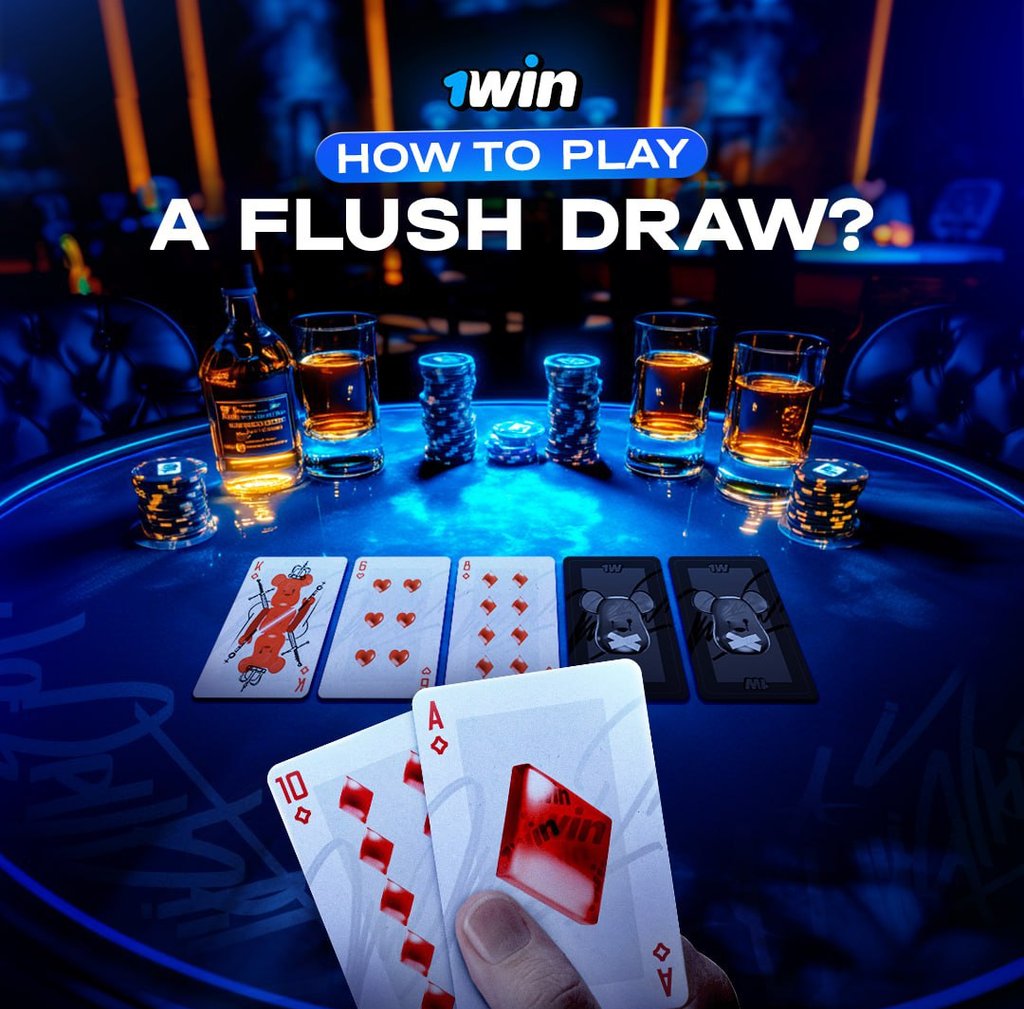
How to play flush draws💳 | 1win Poker
Playing flush draws on the flop is an art that requires strategic understanding. Here are some valuable tips for playing as the preflop aggressor:
🤷♂️ C-betting with a flush draw
Ten years ago, c-betting with a flush draw was common, but with the evolution of poker solvers, we’ve learned it’s not always optimal. Solvers now recommend balancing your betting range and choosing c-bets on more favorable boards.
Good flops to c-bet: K72ss, AAQss, KK6ss.
Flops to check: 864ss, T42ss, J73ss.
👌 Turn play
Checkbacks: Sometimes, it’s crucial not to bet, especially if your range doesn’t have a clear advantage. Use a mix of checks and bets to maintain uncertainty in your lines.
Active Bets: Don’t hesitate to bet, particularly if the turn card fits your range. For example, if the turn card is A♦️A♣️Q♣️ followed by 7♥️, solvers recommend betting 48% of the time, with bets split between half the pot (38%) and an overbet (10%).
🤔 Betting vs checking on the turn
Your decision depends on how well the turn card fits your range. If the turn improves your position, semi-bluffs are more likely to succeed. For instance, on the turn K♥️, which fits your range well, the solver suggests balancing between checking and betting.
Examples:
Bad Turn: 6♥️. The solver will usually check, as this card might have completed your opponent’s straights or two pairs.
Good Turn: K♥️. Here, the solver uses bets and checks more actively, as this card doesn’t improve your opponent’s range.
💡 Insight
Adapting your strategy to different scenarios and choosing the right move based on the cards and your opponent’s actions is key to mastering flush draws in poker.